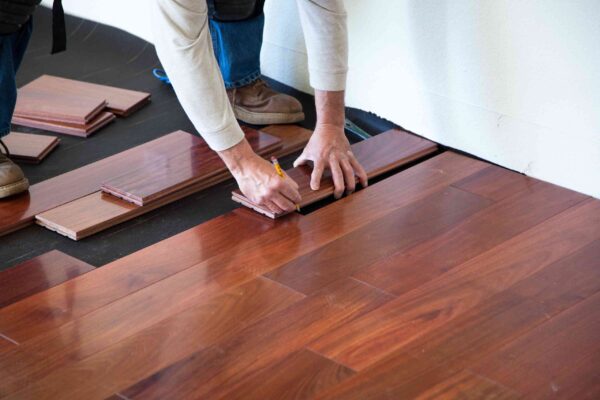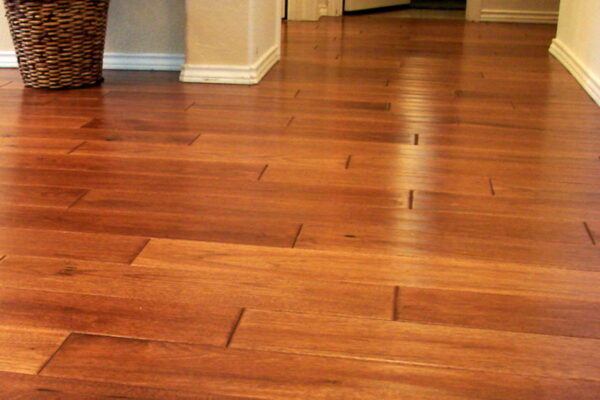

Every year, once the furnace starts running steadily, Southeast Michigan homeowners notice thin lines appearing between their hardwood boards. The first time it happens it can be worrying, but in most homes it's a normal seasonal response to dry indoor air. Understanding why it happens helps you tell the difference between ordinary movement and something worth a closer look.
Why Wood Moves With the Seasons
Wood absorbs and releases moisture as the air around it changes. Michigan summers can be warm and humid, so floorboards take on a little moisture and expand slightly. In winter, forced-air heat pulls moisture out of the air, and the boards shrink. Each board only moves a tiny amount, but across a whole room that adds up to fine gaps between rows. Homes near the Detroit River or Lake Erie shoreline see the same seasonal pattern as homes inland.
Solid vs. Engineered in Dry Weather
Construction plays a role. Solid hardwood is one piece of wood and typically shows more seasonal movement, which is part of its character. Engineered hardwood has a real wood surface over a cross-layered core that resists expansion and contraction, so it usually stays more stable. Neither is a wrong choice; it's one of the trade-offs we talk through during an in-home visit.
Before installation, we give new hardwood time to acclimate inside your home so it adjusts to your indoor conditions. That step won't stop seasonal movement entirely, but it helps the floor settle in and reduces how much it moves afterward.
How to Keep Gaps to a Minimum
- Run a whole-home or room humidifier during the heating season.
- Keep indoor humidity as steady as you reasonably can; many flooring manufacturers publish a recommended range.
- Avoid big thermostat swings, even when you travel for the holidays.
- Clean with a barely damp mop or a wood-floor cleaner, never a soaking-wet mop.
We don't recommend filling seasonal gaps with wood filler in the middle of winter. When the boards swell again in summer, filler can get squeezed out or put stress on the floor.
Not sure whether your gaps are normal?
Have us take a lookWhen It's More Than Seasonal
Seasonal gaps tend to be fairly even and close up as humidity returns in spring. Gaps that keep widening, show up in just one area, or come with cupping, crowning or soft spots can point to a moisture, subfloor or installation issue. Our floor repair team can assess damaged boards and recommend a fix. If you're planning new wood floors, we'll help you choose a product that suits your home, and we serve homeowners in Wyandotte, Southgate and beyond.